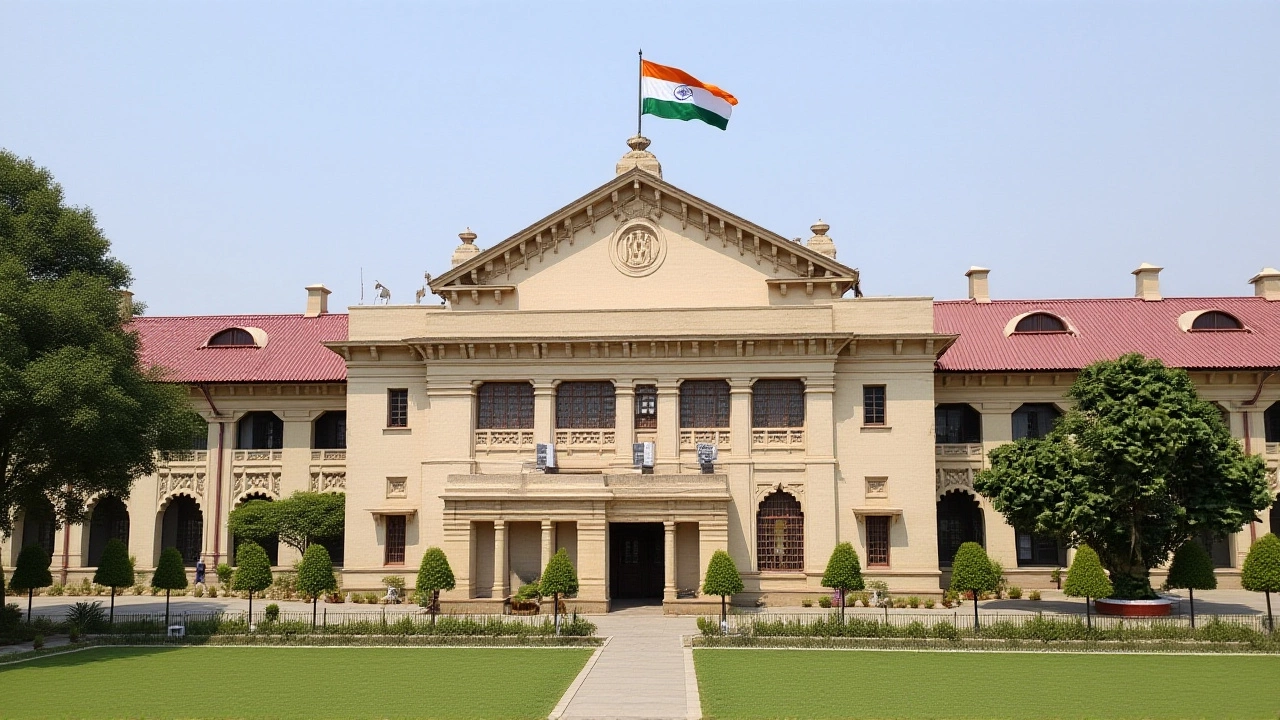
Here’s the thing about free speech in India right now: it’s messy, heavily policed, and often misunderstood. But on Friday, the Lucknow High Court drew a sharp line in the sand that could reshape how we think about social media posts. Judge Arun Kumar Singh Deswal ruled that merely supporting Pakistan doesn’t automatically make you an enemy of the state under the new Bharatiya Nyaya Sanhita (BNSS).
This isn’t just legal jargon. It’s a massive shift for two young men—Riyaaz, an 18-year-old student, and Javed, a resident of Meerut—who were locked up for their online activity. The court granted them bail, emphasizing that unless your post directly threatens India's sovereignty or integrity, it falls under constitutional freedom of expression.
The Line Between Opinion and Treason
The core issue here is BNSS Section 152, which penalizes acts endangering India’s sovereignty, unity, and integrity. For years, this section has been a blunt instrument used against dissenters. But Judge Deswal’s bench clarified something crucial: context matters.
In Riyaaz’s case, he posted content supporting Pakistan after the April 22 terror attack in Pahalgam. Police booked him under Sections 152 and 196 of the BNSS. He had been in jail since May 25. The court looked at the post closely. Turns out, there was no mention of India, no insulting images, and nothing that explicitly attacked the nation’s dignity. "At first glance," the judge noted, "this does not fall under Section 152."
The twist? The Supreme Court’s landmark ruling in Imran Pratapgarh v. State of Gujarat came into play. That judgment reaffirmed that freedom of thought and expression is a fundamental right under Article 19(1)(a) of the Constitution. The Lucknow bench argued that narrow interpretations shouldn’t be applied unless there’s a clear threat to national security.
Two Cases, One Principle
It wasn’t just Riyaaz. In a separate but related case, Javed from Meerut faced similar charges. He uploaded a video on WhatsApp status showing Prime Minister Narendra Modi and Pakistan’s PM allegedly exchanging harsh words and encouraging war so citizens would remain silent for five years. Sounds serious, right?
Yet, even here, the court found grounds for bail. Javed had been detained since June 11, 2025. His lawyer argued that even if the act were true, it didn’t meet the threshold for Section 152. The Additional Government Pleader (AGP) opposed this, claiming the video fueled enmity between nations. But the court disagreed with the severity of the charge relative to the evidence.
"The video, prima facie, does not fall under the purview of Section 152," the order stated. This aligns with the principle established in Riyaaz’s case: mere support for another country, without direct harm to India’s unity, isn’t treason.
Why Bail Was Granted
Bail decisions aren’t just about guilt or innocence; they’re about procedural fairness too. In both cases, the court highlighted key factors:
- Age and Criminal Record: Both Riyaaz and Javed are young with clean records.
- Charge Sheet Filed: Since the police had already submitted charge sheets, further custody interrogation was deemed unnecessary.
- Procedural Lapses: In Riyaaz’s case, the mandatory preliminary inquiry under Section 173(3) for offenses under Section 196 wasn’t conducted.
The court emphasized that Section 152 carries severe penalties, so its application requires "due caution and proper standards." You can’t just throw someone in jail because their tweet makes people uncomfortable.
Conditions Attached to Freedom
Freedom comes with strings attached. Both defendants received conditional bail. They must cooperate with investigations, avoid posting any provocative content on social media, and stay away from criminal activities. Violate these terms, and the bail gets revoked instantly.
This balance reflects the judiciary’s attempt to protect civil liberties while maintaining public order. It’s a delicate dance, especially in today’s hyper-connected world where one click can spark outrage across millions of screens.
Broader Implications for Digital Rights
These rulings send a ripple effect through India’s digital landscape. With over 700 million internet users, social media is the town square for democracy. Yet, laws like BNSS Section 152 have often been weaponized to silence critics. By clarifying the boundaries, the Lucknow High Court offers some relief—but also raises questions.
How do we define "threat to sovereignty"? Is sharing news articles enough? What about memes? Experts warn that while this decision is progressive, implementation remains tricky. Lower courts may still interpret vague provisions differently. Plus, political pressure continues to influence law enforcement actions.
Still, for activists and ordinary citizens alike, this verdict provides hope. It reminds us that dissent isn’t dangerous—it’s essential. As long as our voices don’t incite violence or secession, we belong in the conversation.
Frequently Asked Questions
Does supporting Pakistan constitute a crime in India?
No, not automatically. According to the recent Lucknow High Court ruling, merely expressing support for Pakistan without threatening India’s sovereignty, unity, or integrity does not violate BNSS Section 152. Context and intent matter significantly.
What is BNSS Section 152?
Section 152 of the Bharatiya Nyaya Sanhita penalizes acts that endanger India’s sovereignty, unity, and integrity. It replaced older sedition-related laws and carries heavy imprisonment sentences. However, courts now require concrete evidence of actual threats before applying it.
Who are Riyaaz and Javed?
Riyaaz is an 18-year-old student arrested for pro-Pakistan social media posts after the Pahalgam attack. Javed is a Meerut resident jailed for uploading a controversial WhatsApp video involving PM Narendra Modi. Both were granted bail by the Lucknow High Court based on lack of direct threat to national security.
Can I share critical opinions about government policies online?
Yes, generally speaking. Criticism of government policies is protected under Article 19(1)(a) unless it incites violence, promotes disaffection towards armed forces, or threatens national unity. Always ensure your content stays within legal bounds and avoids hate speech.
What happens if I violate bail conditions?
Violating bail conditions—such as posting provocative content or failing to cooperate with investigations—can lead to immediate cancellation of bail. Courts take such breaches seriously, and offenders may face re-arrest along with additional legal consequences.